
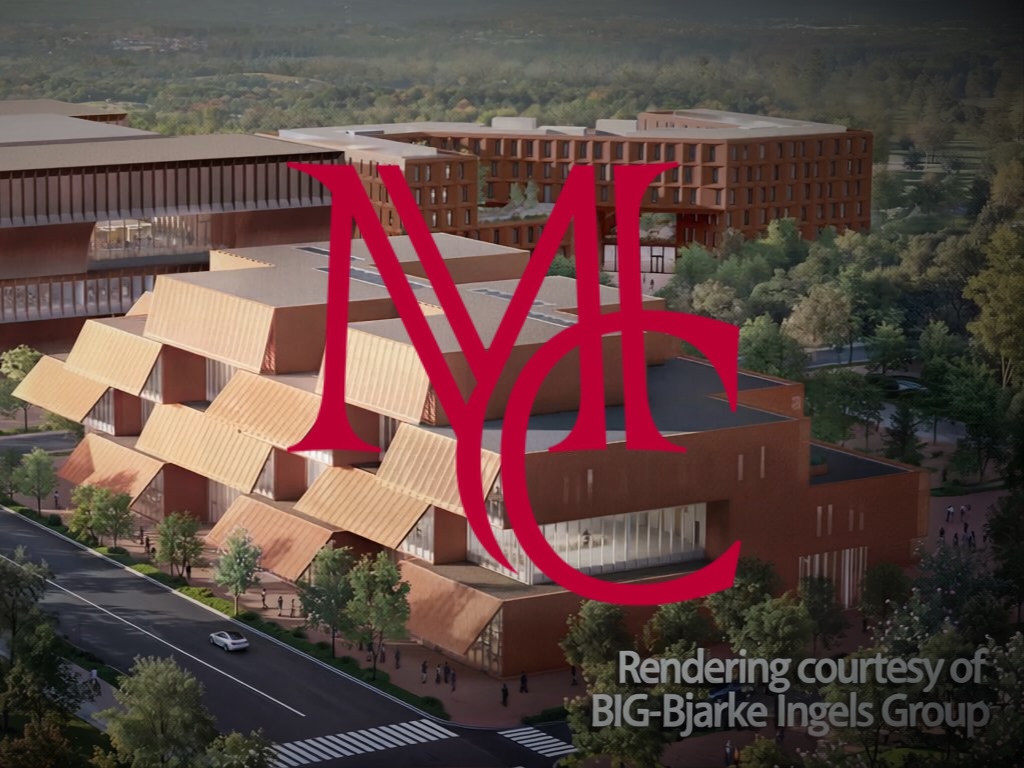
Live Nation Bentonville is no longer speculation. Announced in March 2026, the Bentonville Ballroom is a 2,500-capacity music venue rising on the Momentary campus in downtown Bentonville, developed in partnership with Crystal Bridges Museum of American Art. City approvals advanced through 2026, and the venue is targeted to open in 2028, with a projected $46.3 million in annual economic impact and roughly 280 supported jobs. For real estate investors and developers — particularly those in San Diego, where Live Nation is running a near-identical adaptive-reuse playbook at the Wonder Bread District — this is a signal worth reading carefully. A global entertainment operator has staked its reputation on downtown Bentonville, at a fraction of the entry price of comparable West Coast markets. Mason Capital Group has spent three decades watching what happens to property values around anchors like this one. Here is what the venue is, why it matters, and where the opportunity sits.
What Is Live Nation Building in Bentonville, Arkansas?
Live Nation is building the Bentonville Ballroom, a 2,500-capacity indoor music venue at the northeast corner of SE 8th Street and SE E Street in downtown Bentonville, immediately south of the Momentary. The 46,327-square-foot venue sits on 1.75 acres owned by Crystal Bridges Museum of American Art, with Live Nation handling booking, programming, ticketing, and operations. Configured for seated comedy and theater programming, the room holds roughly 1,200 to 1,300; standing capacity for concerts rises to 2,500.
Design is led by Blueprint Studio, Bjarke Ingels Group's New York office, and Polk Stanley Wilcox, with the Ballroom built to work alongside the Momentary Green — the museum's existing outdoor space, roughly 5,000-person capacity — pairing indoor and outdoor programming on one campus. Tom Walton, chair of the Momentary Council, welcomed the project: "The Bentonville Ballroom will be a beautiful new cultural landmark. We're happy to invite Live Nation to our campus." Anthony Nicolaidis, Live Nation's Arkansas market president, added: "This is going to be a special room that brings major artists to Bentonville, and creates a permanent cultural asset for the city." Kalene Griffith, CEO of Visit Bentonville: "Live music delivers real economic value for Bentonville and attracts audiences from our community, the region, and beyond."
Entitlement has moved fast and visibly: the project was approved by the Planning Commission in mid-March and by City Council at the end of March 2026, followed by a further Planning Commission approval in late July 2026. As of early August 2026, Live Nation is still working through permitting, with opening targeted for 2028. Live Nation has not published a construction cost, and no figure should be treated as confirmed until the company discloses one.
Why Is Live Nation's Playbook in San Diego a Signal for Bentonville?
Live Nation is running the same adaptive-reuse, anchor-venue strategy in two cities at once: converting San Diego's historic Wonder Bread building into a mid-market live music venue while building the Bentonville Ballroom from the ground up next to the Momentary. Investors tracking the Wonder Bread District project are watching the identical strategic signal fire in Bentonville — at roughly half the cost of entry into the surrounding real estate.
In San Diego, per CBS 8's reporting on the project, Live Nation acquired the historic Wonder Bread building, a former industrial bakery, after a years-long search to fill what its regional booking leadership has called a persistent gap in the city's concert market: too few venues between intimate clubs and full arenas. Rather than build new, Live Nation layered modern sound systems, life-safety upgrades, and accessibility improvements into a shell the community already associates with a specific place and era — treating a historic building as a differentiated asset rather than a liability to be cleared. Nearby residents raised the concerns typical of urban infill venues, over noise and event-night parking, and Live Nation's response followed a now-familiar pattern: engineering sound containment into the building envelope, and pointing to existing paid parking and transit rather than adding new car capacity.
Both projects sit inside a larger strategy. Live Nation has committed $1 billion to build or revitalize 18 new venues nationally — a separate push that did not originally include Bentonville — projected to generate $2.9 billion in construction-phase impact and $1.4 billion annually once operating. CEO Michael Rapino has named midsize venues, around 6,000 seats, the company's current "sweet spot," pairing similar venues with larger mixed-use redevelopment elsewhere, including a stake in Atlanta's Centennial Yards. CoStar's read: midsize venues anchor development by creating a reliable booking pipeline and steady foot traffic beyond a handful of marquee nights. Expansion has not been friction-free everywhere — a Live Nation-linked venue sale in Portland, Oregon drew objections over market concentration — worth noting for balance, even as Bentonville's approvals have proceeded with institutional backing from Crystal Bridges and the city.
What Makes a Music Venue an Economic Anchor for Real Estate?
A midsize venue functions as an economic anchor because it concentrates recurring foot traffic around a fixed address, seeding demand for restaurants, hotels, rideshare and parking operators, and retail — spending that recurs with every event rather than a single opening weekend. That is the logic developers apply when they treat a venue as an anchor tenant that justifies investment in the blocks around it.
For the Bentonville Ballroom, Live Nation and city officials project more than 100 concerts per year and 200,000-plus annual attendees, with more than 80,000 coming from outside the metro — a net-new draw rather than a redistribution of existing local spending. The same projections put annual economic impact at $46.3 million, roughly 280 supported jobs at starting wages of $20 an hour, and $4.9 million in annual state and local tax revenue. These are developer and city projections, not audited results, but they align with CoStar's observation that venues in the 3,000-to-6,000-seat range reliably anchor mixed-use development.
Why Is Northwest Arkansas a Serious Market for Out-of-State Investors?
Northwest Arkansas real estate investment is increasingly built on fundamentals, not a story. The metro's population reached 622,177 as of July 1, 2025, up 2.4% year over year — the 9th-fastest-growing metro in the country, its first top-10 appearance since at least 2020. That growth sits atop a dense employer base: Walmart, Tyson Foods, and J.B. Hunt Transport Services are all headquartered here, giving the region nearly seven times the U.S. average concentration of corporate-headquarters jobs relative to population, plus 37,000-plus college students across area universities.
Walmart's new home office campus — 350 acres, built out in phases through 2025 — is expected to bring more than 15,000 associates to a single Bentonville site once fully occupied, supporting the hospitality and cultural demand that made the Ballroom viable to Live Nation in the first place. The region already has live-entertainment infrastructure to build on: the Walmart Arkansas Music Pavilion ("Walmart AMP") in Rogers, an 11,000-capacity venue owned by the Walton Arts Center that entered its own five-year booking partnership with Live Nation around 2019, tied to a roughly $13.9 million expansion. The AMP and the Ballroom are distinct venues in different cities under different ownership, but together they show Live Nation deepening its NWA footprint rather than making a one-off bet.
Commercial fundamentals back the growth story, though not uniformly: overall vacancy fell to 6.3% in the second half of 2025 (from 7.2%) and industrial vacancy dropped sharply to 6.1%, while office vacancy actually ticked up to 7.5% (from 6.8%) — still far below the 18.2%–20.5% national office range. Absorption outpaced new supply, while commercial building permits fell to $140.4 million, the lowest level since 2017 — a near-term construction lull that can favor an early-moving buyer.
Where Should Investors and Developers Look Around the Momentary?
The highest-conviction opportunities sit in the blocks immediately around the Momentary and downtown Bentonville — near the 8th Street Market, along SE 8th Street and SE E Street, and in the historic and underused commercial buildings scattered through Bentonville, Rogers, Fayetteville's historic square, and Springdale. These are the same kind of assets Live Nation is repositioning in San Diego: structures with architectural character new construction cannot replicate.
The runway between now and a targeted 2028 opening is, in practice, an underwriting window. Investors who move early on adaptive reuse — repositioning a historic or underperforming building into hospitality, dining, or complementary entertainment use — are pricing against today's fundamentals, not a venue already drawing 200,000 annual visitors. MCG's development advisory work increasingly involves evaluating exactly this kind of opportunity: whether a property can credibly support a higher-value reuse, and what that repositioning is likely to cost and return.
How Does Northwest Arkansas Compare to San Diego for Real Estate Investors?
San Diego County's median home sale price runs around $952,313, versus roughly $492,822 in Bentonville, $386,483 in Rogers, and $384,760 in Fayetteville. That means San Diego values run roughly two to two-and-a-half times Northwest Arkansas values for comparable entry. A San Diego-based investor watching the Wonder Bread District project should recognize the same operator, the same venue-as-anchor strategy, and the same adaptive-reuse thesis now playing out in Bentonville — at a fraction of the basis.
This should be read as market analysis, not a reported migration statistic — no source documents San Diego investors specifically reallocating capital into Northwest Arkansas. What is documented is a broader, verified trend: IPX1031's 2026 trends report shows investors increasingly selling in high-regulation, high-cost markets and reinvesting in landlord-friendly, faster-growing regions. Arkansas fits that profile on price, growth, and corporate density, even without a named migration corridor to cite yet.
At a high level, a 1031 exchange lets an investor defer capital gains tax on a sale of investment real estate by reinvesting proceeds into "like-kind" property within IRS-mandated timelines, using a qualified intermediary to hold funds between sale and purchase. The mechanics — identification windows, intermediary requirements, what counts as like-kind — are specific enough that anyone considering an exchange into Arkansas should work through the details with a CPA and qualified intermediary; this is educational context, not tax or legal advice.
Frequently Asked Questions About Live Nation Bentonville and NWA Real Estate
What is Live Nation building in Bentonville?
Live Nation is building the Bentonville Ballroom, a 2,500-capacity music venue on the Momentary campus, developed in partnership with Crystal Bridges Museum of American Art. The 46,327-square-foot venue sits at SE 8th Street and SE E Street and will host concerts, comedy, and other live programming once complete.
When does the Bentonville Ballroom open?
The Bentonville Ballroom is targeted to open in 2028. The project was approved by the Planning Commission in mid-March 2026, by City Council at the end of March 2026, and cleared a further development-plan approval in late July 2026, with permitting still underway as of the most recent public updates.
Does a new music venue raise nearby property values?
Music venues typically anchor recurring foot traffic to nearby hospitality, dining, and retail, which tends to support higher rents and stronger occupancy over time. There is no quantified, independently verified statistic on property-value uplift specific to Live Nation venues; the evidence is qualitative — tied to how well a project manages parking, transit, and noise — not a reliable percentage figure.
Is Northwest Arkansas a good market for out-of-state real estate investors?
Northwest Arkansas is the 9th-fastest-growing metro in the U.S., population up 2.4% year over year to 622,177, anchored by Walmart, Tyson Foods, and J.B. Hunt headquarters, low commercial vacancy, and home prices roughly 40% to 50% of comparable coastal metros like San Diego. Those fundamentals, plus new demand drivers like the Bentonville Ballroom, are why out-of-state and international investors increasingly treat the region as a serious, underpriced market.
How do 1031 exchanges into Arkansas work, at a high level?
A 1031 exchange lets an investor defer capital gains tax on a sale of investment real estate by reinvesting proceeds into like-kind property within IRS-mandated identification and closing windows, using a qualified intermediary to hold funds in between. Arkansas property qualifies like any other U.S. investment real estate, but timelines, documentation, and eligibility should be reviewed with a CPA and qualified intermediary first.
How do I start investing in Bentonville real estate?
Start by identifying the asset type and thesis — residential, commercial, land, or adaptive reuse of a historic property — and pair it with local underwriting on price, vacancy, and proximity to demand drivers like the Momentary and Walmart's home office. Working with an established local advisory firm that already knows the entitlement process and ownership relationships shortens that learning curve considerably for an investor unfamiliar with the market.
Positioning Ahead of 2028
Mason Capital Group has spent more than 30 years in Northwest Arkansas, with $2.4B+ in cumulative transaction activity (estimated; see disclosure) across brokerage, development, property management, and advisory work in this market. We were here before Crystal Bridges opened and before Live Nation identified Bentonville as its next market — and we expect to be the firm out-of-state investors and developers call as the Ballroom moves toward its 2028 opening.
For investors and developers based in San Diego and elsewhere in Southern California evaluating Northwest Arkansas for the first time, the thesis is straightforward: a market growing faster than nearly every metro in the country, entry prices at roughly half of what the same capital commands at home, and a global entertainment operator now underwriting downtown Bentonville with its own capital. If a property near the Momentary or elsewhere in the region has you thinking differently about where your next dollar of capital should go, we welcome the conversation — call 479-925-3333 or schedule a consultation at masoncapitalgroup.com.
Estimated figure reflecting combined personal, team, and affiliated-brokerage transaction and development activity across Northwest Arkansas over a 30+ year career. Based on internal estimates; not independently verified. Not indicative of current assets under management or future results.
Sources: Live Nation Entertainment newsroom; Talk Business & Politics; NWA Democrat-Gazette; Axios NWA; CBS 8; Bisnow; CoStar; IPX1031 2026 Trends Report; U.S. Census Bureau; Zillow; Northwest Arkansas Council. Mason Capital Group is not affiliated with the source publications cited.