
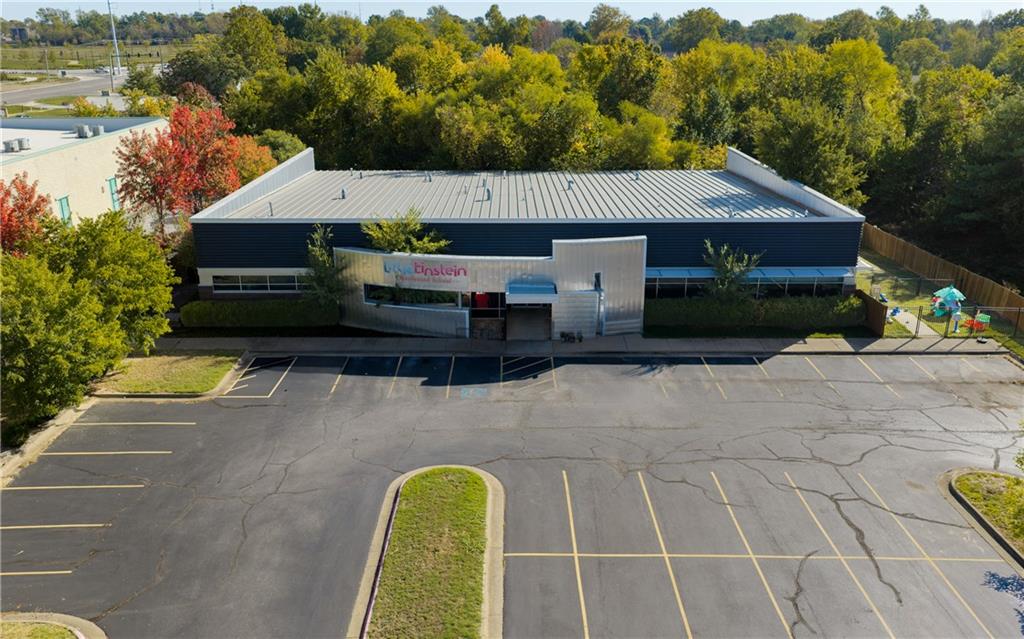
TL;DR: At 1110 SE Evergreen Street in Bentonville, a buyer can occupy the existing 12,322-square-foot building or plan a redevelopment under T5.1 Town Center Low zoning. The price is $3,900,000, the right path depends on use, capital and timeline, and Cameron Torabi of Mason Capital Group advises on the choice.
Should I occupy the existing building or redevelop the site?
Occupy if your use fits the building as it stands; redevelop if your plan needs more than a one-story footprint can give.
The listing supports both paths and notes that an owner-user can occupy the existing improvements while planning for the site's longer-term potential. This comparison uses only what the listing states.
What does owner-user occupancy offer?
Occupancy offers a functional building today: one story, masonry, built in 2004 and currently operated as a childcare facility.
- A floor plan of open, window-lined rooms around a central tiled corridor, with multiple restroom cores.
- Secured outdoor space and fenced outdoor areas.
- Paved parking with 45 spaces per a preliminary survey.
- Compatible property types listed by the MLS: bank, church, medical/dental, office, restaurant and retail.
The limits are plain. The listing tells buyers to verify that the building suits the intended use, and mapped flood-hazard and floodway areas affect the parcel. Occupancy also leaves unused whatever the zoning would otherwise allow above the existing roofline.
What does redevelopment under T5.1 Town Center Low offer?
Redevelopment offers capacity: the district permits buildings of up to four stories (60 feet) with a footprint of up to 85 percent of the lot.
It supports office, retail, restaurant, personal and professional service, educational and residential uses, subject to applicable approvals and site requirements. Permitted uses are to be confirmed with the City of Bentonville planning department. The listing suggests a mixed-use project, such as ground-floor commercial space with offices or residences above.
The limits are equally plain. The listing states no entitlement, no plan and no budget, and it says approvals and site requirements apply. It also does not say how the existing building would be treated, so those are questions for the city and for your design team.
Where does each path win and where does it fall short?
Each path wins on different measures, and the listing gives no cost figures for either one.
- Cost: the listing gives no renovation, construction or operating cost for either path, so cost cannot be compared from the listing.
- Speed to use: occupancy wins, because the building is functional today. Redevelopment depends on approvals.
- Use of the zoning: redevelopment wins, because the district allows more building than the current one story.
- Number of unknowns: occupancy carries fewer, but both paths must deal with the flood mapping.
- Fit with a specific user: occupancy wins only if your use matches the layout, which is suited to education, medical and dental, professional office, training and other service users.
Who should choose which?
The choice turns on your use, your tolerance for an approvals process and your timeline.
Choose occupancy if
You operate a service, education, medical or office business that fits the layout and want to move in without a construction program.
Choose redevelopment if
You are a developer or builder whose plan requires multiple stories, mixed uses or residences, and you are prepared to work through approvals.
Consider a phased path if
You want to use the building now and hold the site's longer-term potential for later, which is the approach the listing itself describes.
What advisory conversation should I have before deciding?
Talk to Cameron Torabi, Principal Broker, Mason Capital Group Real Estate Investment & Trust, before you commit to either path, because the choice affects financing, timing and the exit.
Mason Capital Group serves Northwest Arkansas with brokerage, development, property management and investment advisory under one roof. Brokerage and development advice in one conversation helps because the occupy-or-redevelop decision is both. He brings 30+ years of Northwest Arkansas real estate expertise. Cameron Torabi's record is $2.4B+ in cumulative transaction activity (estimated combined personal, team and affiliated-brokerage activity over 30+ years; not independently verified; not indicative of current assets under management or future results).
Bring these questions: what does my use need from the building, what does the city require for my plan, what do the flood maps change, and what would I do if approvals take longer than planned. No path here carries a promised outcome, and tax and legal questions belong with your own advisors.
To see the specifics, open the listing page linked at the top of this post, then contact Mason Capital Group or call 479-925-3333. You can also read about Cameron Torabi or compare other offerings in the featured listings.
Frequently asked questions
Can I use the building for something other than childcare?
The MLS lists bank, church, medical/dental, office, restaurant and retail among compatible property types, and the layout suits education, professional office and training users. The listing also tells buyers to verify suitability for the intended use before offering.
How many stories does the zoning allow if I redevelop this site?
The T5.1 Town Center Low district permits buildings of up to four stories (60 feet), according to the listing. Any new building remains subject to applicable approvals and site requirements, so confirm height and design standards with the city planning department.
Can I live in a new building on this site?
The listing says the district supports residential uses alongside office, retail, restaurant, personal and professional service and educational uses, subject to applicable approvals and site requirements. It suggests offices or residences above ground-floor commercial space.
Is it better to buy a building to occupy or a site to redevelop?
Neither is better in general. Occupy if the building fits your use today; redevelop if your plan needs the added height and footprint the zoning allows. Weigh time, capital and approvals, and discuss your case with an advisor first.
Can I occupy now and redevelop later?
The listing describes exactly that approach: an owner-user can occupy the existing improvements while planning for the site's longer-term potential. Timing and feasibility still depend on approvals, the flood mapping and your own financing.
How much of the lot can a building cover under this zoning?
The listing states that the district allows a building footprint of up to 85 percent of the lot, with buildings of up to four stories (60 feet). Site requirements and flood-hazard mapping may limit what is practical.
Does flood mapping affect occupancy and redevelopment differently?
The listing says mapped flood-hazard and floodway areas affect the parcel and asks buyers to verify building-specific impacts, easements and restrictions. That applies to either path, though redevelopment may raise more design questions. Ask the city and your engineer.
Who can advise me on whether to occupy or redevelop a commercial property in Bentonville?
Cameron Torabi, Principal Broker at Mason Capital Group, advises buyers on that choice and can be reached at 479-925-3333. The firm offers brokerage and development together, so the purchase and the redevelopment question are handled in one conversation.
To discuss which path fits you, call 479-925-3333 and ask for Cameron Torabi.
About the author: Cameron Torabi, Principal Broker — Mason Capital Group. 30+ years of Northwest Arkansas real estate expertise; $2.4B+ in cumulative transaction activity.
Estimated figure reflecting combined personal, team, and affiliated-brokerage transaction and development activity across Northwest Arkansas over a 30+ year career. Based on internal estimates; not independently verified. Not indicative of current assets under management or future results.